
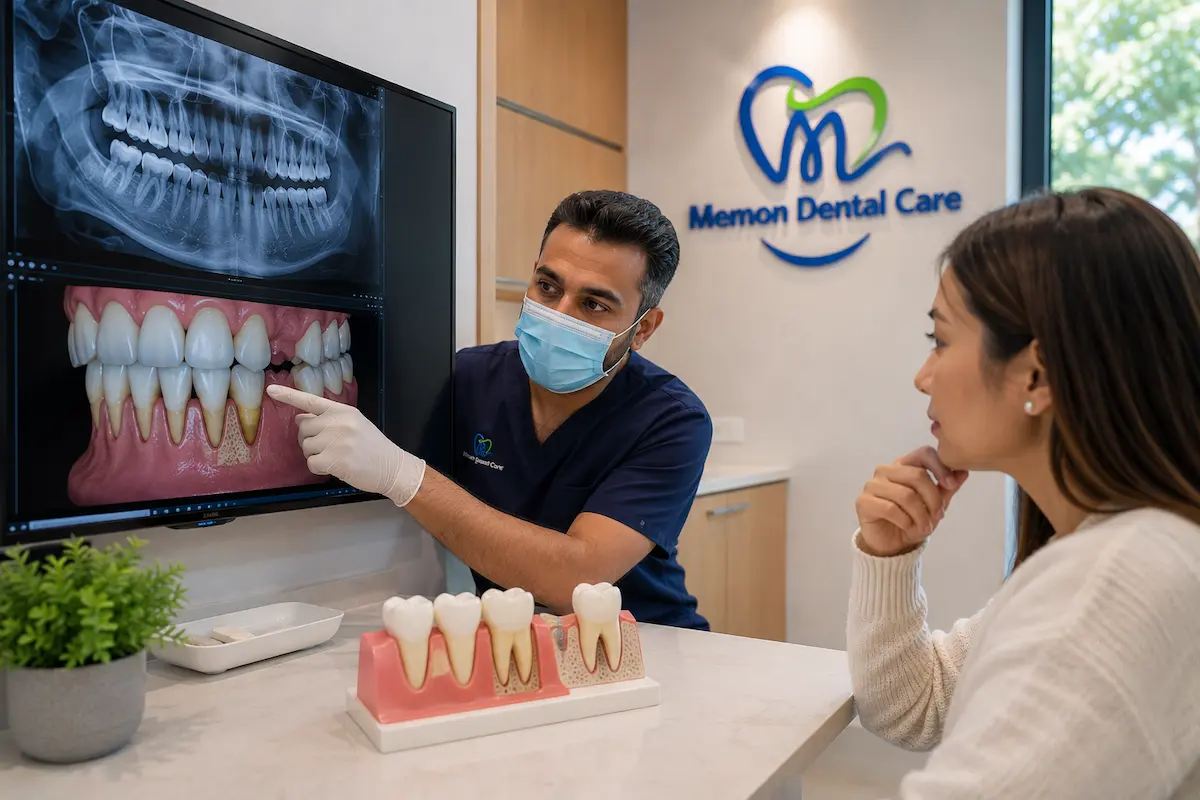
A tooth sinking into gum tissue is one of those changes that looks alarming the moment you notice it. Maybe one tooth suddenly looks shorter than the rest, or it seems to disappear lower each week. Most people head straight to Google before booking an appointment. Fair enough, since a mirror discovery like this feels urgent. The good news is that this almost always has a clear cause. Most causes respond well to treatment once a dentist takes a proper look.
Why Does a Tooth Sink Into the Gum?
There are a few different reasons a tooth can appear to sink into the gum. Gum recession is one of the most common causes. This happens when gum tissue pulls away from the tooth, exposing more of the root. The tooth can then look longer or sit at an odd angle against its neighbours. Brushing too hard, gum disease, and genetics can all contribute to recession over time.
Tooth Ankylosis
Another cause is a condition called ankylosis. Here the tooth fuses directly to the jawbone instead of connecting through the normal periodontal ligament. Once that fusion happens, the tooth cannot move upward with the rest of the jaw. Over time, it appears to sink lower than the teeth around it. Ankylosis shows up more often in children with baby teeth. Adult teeth can develop it too, especially after an injury or an untreated infection.
Bone Loss From Gum Disease
Bone loss from advanced gum disease is a third possibility. When supporting bone breaks down, a tooth can lose its anchor and shift position. Sometimes it tilts or settles lower into the socket. Other warning signs usually accompany this stage, so it rarely happens without any symptoms at all.
Warning Signs to Watch For
Here is what tends to show up alongside a tooth sinking into gum tissue:
- Tooth feels loose or wobbly when you bite down
- Gum swelling, redness, or bleeding near the affected tooth
- Persistent bad breath or a strange taste in the mouth
- Pain or pressure when chewing on that side
- A tooth that looks shorter or angled differently to the ones beside it
Do not ignore any of these signs, and avoid waiting at home hoping things resolve on their own. Ignoring gum disease or ankylosis can lead to further bone loss, shifting nearby teeth, or losing the tooth altogether.
How This Gets Treated
Treatment depends entirely on the cause, which is why an accurate diagnosis matters so much. For gum disease, dentists typically start with a deep clean to remove the harmful bacteria causing the damage. A proper check-up and treatment plan then helps stop things progressing further. When ankylosis is the cause, treatment can range from simple monitoring for mild cases to orthodontic repositioning. More advanced cases sometimes need extraction. The right option depends on how the tooth affects your bite and the teeth around it.
A tooth sinking into gum tissue can sometimes damage your smile before treatment happens. In that case, crowns, bridges, and other restorative options can help. They rebuild both function and appearance once your dentist treats the issue. For anyone whose shifting teeth have thrown off their bite, an orthodontic assessment can help you decide on realignment. If the tooth needs cosmetic attention afterward, our cosmetic dentistry team can talk you through the options.
When to See a Dentist
The most important step is booking an early check-up. A visit with one of our experienced dentists usually includes an X-ray. That is the only reliable way to check what is really happening. It confirms whether the tooth has fused, whether gum disease is at play, or whether something else is going on. According to healthdirect Australia, gum disease affects roughly three in ten Australian adults in a moderate to severe form. So if gum disease has reached your gums too, you are not alone. Dentists can manage it well once they catch it early.
Frequently Asked Questions
Is a tooth sinking into the gum always serious?
Not always, but never dismiss it. Sometimes it is a mild case that just needs monitoring. Other times it points to active gum disease or bone loss needing prompt treatment.
Can a sunken tooth be fixed?
In many cases, yes. Treatment ranges from deep cleaning and gum therapy to orthodontic or restorative work. The right path depends entirely on what caused the tooth to sink in the first place.
Does a sinking tooth hurt?
Not always, Some people feel no pain at all in the early stages, while others notice pressure, sensitivity, or discomfort when chewing. Absence of pain does not mean absence of a problem.
How do dentists diagnose a sinking tooth?
Your dentist will examine the tooth and gum visually, then take an X-ray to check the bone and root structure. This is the only reliable way to confirm whether it is ankylosis, gum disease, or something else.
Conclusion
A tooth that looks like it is sinking into the gum is flagging something in your mouth that needs attention. That could be gum disease, bone changes, or a fused root. The sooner your dentist checks it, the more options you have and the simpler the fix tends to be. If you have noticed this happening, book in with our Castle Hill team. Let us take a proper look before it becomes a bigger issue.