
Are dentists medical doctors? It is one of those questions most people feel slightly embarrassed to ask out loud, even though nearly everyone wonders about it at some point. You sit down in the dental chair, see “Dr” in front of your dentist’s name on the certificate on the wall, and you wonder quietly whether that means the same thing as the “Dr” on your GP’s door.
The honest answer is: not exactly. But the full picture is more nuanced, more interesting, and far more reassuring than a simple yes or no. And understanding it properly will change how you think about the professionals caring for your oral health.
So, Are Dentists Medical Doctors? Here Is What the Title Actually Means
In Australia, dentists are not medical doctors in the traditional physician sense. A medical doctor completes a Bachelor of Medicine and Bachelor of Surgery (MBBS) or a Doctor of Medicine (MD) and registers with the Medical Board of Australia. Their training covers the full human body, systemic disease, pharmacology, surgery, and general medicine.
A dentist follows a completely different pathway. To become a registered dental practitioner in Australia, a dentist completes an accredited dental degree and registers with the Dental Board of Australia. Dentists are highly trained oral health professionals, but they are not medical doctors unless they have separately completed a medical degree.
That said, calling dentistry anything less than a doctoral-level profession would be flat-out wrong. Dental degree programs typically span five to six years, including both theoretical study and extensive clinical training. The academic standard is rigorous, the clinical hours are intensive, and the scope of knowledge required is genuinely comparable to medicine in terms of depth within the oral and maxillofacial domain.
So the cleaner answer is this: dentists are doctors of oral health. They are not physicians or GPs. They are highly qualified, university-trained, government-registered health professionals with a specific and sophisticated area of expertise.
Why Do Dentists Use the Title “Dr” If They Are Not Medical Doctors?
This is where most of the confusion comes from, and it is completely understandable.
In Australia, dentists may legally use the title “Dr”, provided it does not mislead patients into thinking they are medical doctors. This usage is permitted based on tradition and professional courtesy, but there are expectations for transparency. It is good practice for dental professionals using the “Dr” title to also state their role, such as “Dr Jane Smith, Dentist” — especially in advertising, signage, or social media.
The title “Dr” in academic and professional life does not exclusively belong to medical doctors. It applies to anyone who holds a doctoral-level qualification. The term doctor is used across several disciplines including dentistry, veterinary science, and academia. A PhD in physics earns the title “Dr.” A veterinarian earns the title “Dr.” A dentist who holds a Doctor of Dental Medicine (DMD) or Doctor of Dental Surgery (DDS) earns the title “Dr” by the exact same logic.
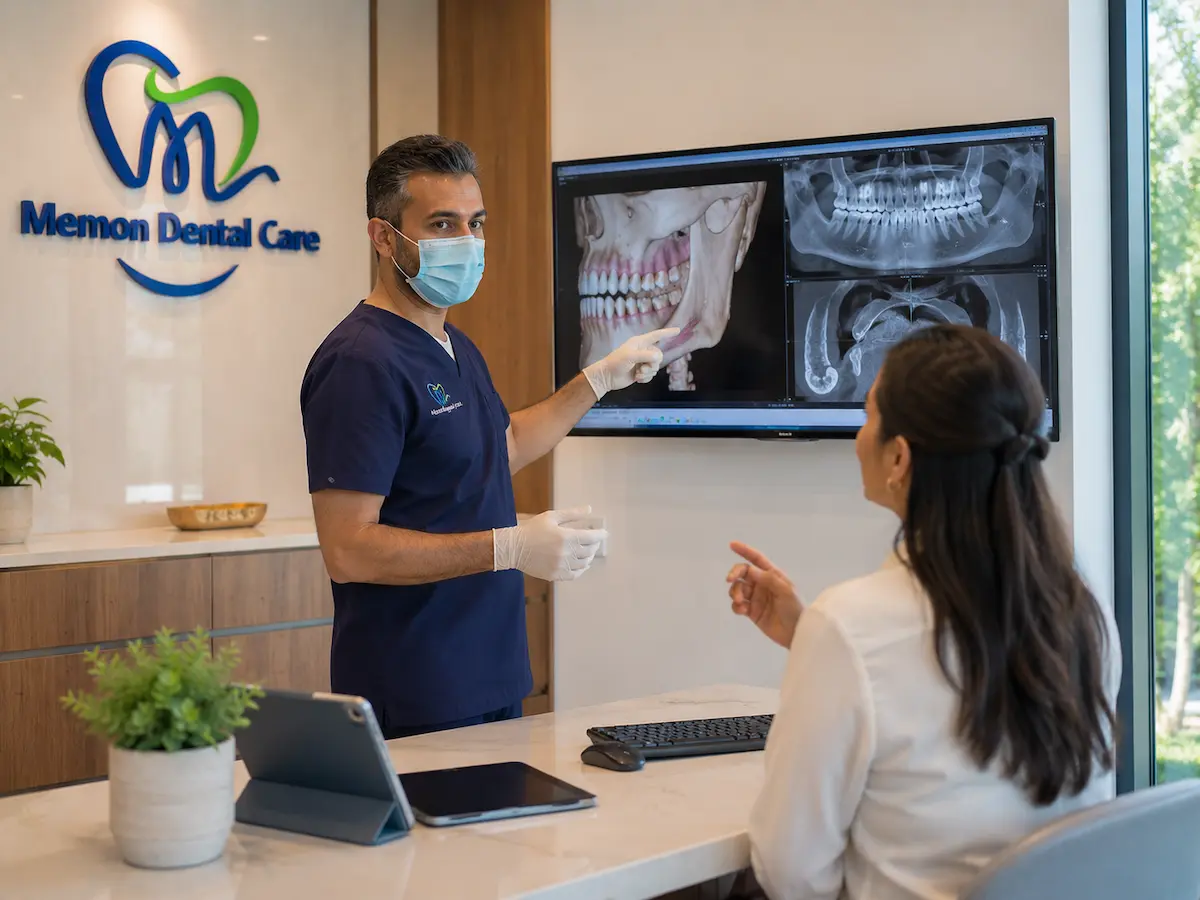
At Memon Dental Care, Dr Mohammed Sohail Memon holds a DMD along with an MDSc in Prosthodontics and a PhD in Jaw Function and Orofacial Pain, placing him well beyond the standard dental qualification. His use of the title “Dr” reflects both his dental doctorate and his postgraduate research degree. This level of qualification matters enormously when you are choosing a dental practice for complex treatment like dental implants Castle Hill or dental crowns Castle Hill.
Are Dentists Medical Doctors in Terms of Training? A Real Comparison
People often assume that because dentists focus on teeth, their training must be narrower or less demanding than a medical degree. That assumption does not hold up when you look at what dental education actually involves.
Here is a clear side-by-side comparison:
Medical Doctor (MBBS or MD):
- 4 to 6 years of university study
- Training covers the full human body and all organ systems
- Supervised clinical placements across multiple hospital departments
- Registers with the Medical Board of Australia (AHPRA)
- Scope covers diagnosis and management of systemic medical conditions
Dentist (BDS, DDS, or DMD):
- 4 to 7 years of university study depending on pathway
- Training covers oral anatomy, oral pathology, pharmacology, radiology, and surgical technique
- Approximately 2,000 hours of supervised clinical placements undertaken from the second year of study
- Registers with the Dental Board of Australia (AHPRA)
- Scope covers diagnosis, prevention, and treatment of oral and maxillofacial conditions
Both pathways produce highly trained professionals with doctoral-level qualifications. Neither is easier than the other. They are simply different in focus. According to the Dental Board of Australia, all registered dental practitioners must meet strict continuing professional development requirements and maintain compliance with professional conduct standards throughout their careers, just as medical doctors do.
What Are Dentists Actually Qualified to Do?
Understanding the scope of dental practice helps clarify exactly what your dentist can and cannot treat, and why they are the right professional for everything involving your oral health.
A dentist’s scope of practice focuses on the oral cavity and related structures. Dentists also assess how oral health connects with systemic health. For example, certain medical conditions such as diabetes may influence gum health.
In practice, a qualified dentist can:
- Diagnose and treat tooth decay, gum disease, and oral infections
- Perform surgical procedures including tooth extractions and root canal treatment Castle Hill
- Prescribe medications including antibiotics and analgesics within their scope of practice
- Interpret dental X-rays and diagnose conditions affecting the teeth, jaw, and surrounding bone
- Design and fit prosthetic devices including dentures, crowns, bridges, and implants
- Identify signs of oral cancer and refer patients appropriately
- Recognise systemic diseases that present with oral symptoms and coordinate with medical colleagues
What dentists do not do is diagnose or treat conditions outside the oral and maxillofacial region. If you have chest pain, a systemic illness, or a condition unrelated to your mouth and jaw, your GP is the right first call. If you have tooth pain, bleeding gums, jaw soreness, or anything affecting your oral health, your dentist is exactly the right professional and no GP referral is required.
Are Dentists Medical Doctors When It Comes to Your Health Decisions?
Here is the practical takeaway for patients: treat your dentist as a medical professional within the oral health domain, because that is exactly what they are.
Your dentist’s decisions about your care are clinical decisions, grounded in the same principles of diagnosis, evidence-based treatment, informed consent, and patient safety that govern any other area of healthcare. They hold AHPRA registration, carry professional indemnity insurance, complete mandatory continuing education, and operate under the same ethical framework as every other registered health practitioner in Australia.
What this means for you practically:
- Take your dentist’s recommendations as seriously as you would a specialist opinion
- Share your full medical history including medications, because oral health and systemic health connect in real ways
- Do not skip dental check-ups thinking they are less important than medical appointments — they are part of your overall healthcare, not separate from it
- If you have concerns about your oral health affecting your general health, your dentist can assess and refer where needed
Our dental check-up Castle Hill appointments go beyond just looking at your teeth. We assess your gum health, screen for signs of oral cancer, examine your jaw function, and review how your oral health connects with your broader medical history.
FAQ: Are Dentists Medical Doctors in Australia?
Can a dentist also be a medical doctor?
Yes, but it requires completing both qualifications separately. A small number of professionals undertake dual training in medicine and dentistry. This pathway is particularly relevant for oral and maxillofacial surgery specialists who may require both degrees for advanced surgical practice. However, most dentists practise solely within dentistry.
Do dentists go to medical school in Australia?
No, Dentists attend dental school, which is a separate faculty from medical school, even at the same university. The degrees, clinical placements, and registration pathways are entirely distinct.
Can a dentist prescribe medication?
Yes, within their scope of practice. Dentists can only prescribe medications within their scope, such as antibiotics or analgesics for oral conditions. They cannot prescribe medications for general medical conditions.
Is a dental specialist different from a general dentist?
Yes, A dental specialist has completed additional postgraduate training beyond the base dental degree, in areas such as orthodontics, oral surgery, periodontics, or prosthodontics. Dr Memon at Memon Dental Care holds an MDSc in Prosthodontics, which represents specialist-level postgraduate study in restorative and prosthetic dentistry, a rare qualification that sets him apart from general dental practitioners.
Should I trust my dentist’s medical opinions?
Within the oral health domain, absolutely. For concerns outside the mouth and jaw, your GP is the right first contact. For anything involving your teeth, gums, jaw, or related structures, your dentist is the appropriate and qualified authority.
How do I verify my dentist’s qualifications in Australia?
Check the AHPRA public register online. Every registered dental practitioner in Australia appears in this database with their registration status and any conditions or notations on their registration. It takes under a minute and gives you confirmed, official information.
Meet the Team at Memon Dental Care Castle Hill
Dr Mohammed Sohail Memon holds a DMD, MDSc in Prosthodontics, and a PhD in Jaw Function and Orofacial Pain. He has been a clinical educator at the University of Sydney since 2009. His qualifications place him among the most thoroughly credentialed dentists in the Hills District, with specialist postgraduate training that most dental practices in Castle Hill simply cannot offer.
Whether you need a routine check-up, restorative treatment, teeth whitening Castle Hill, or complex prosthetic work, you are in the hands of a genuinely qualified professional who takes the responsibility of that title seriously.
Book your appointment at Memon Dental Care today and experience what properly qualified, patient-centred dental care actually feels like.