
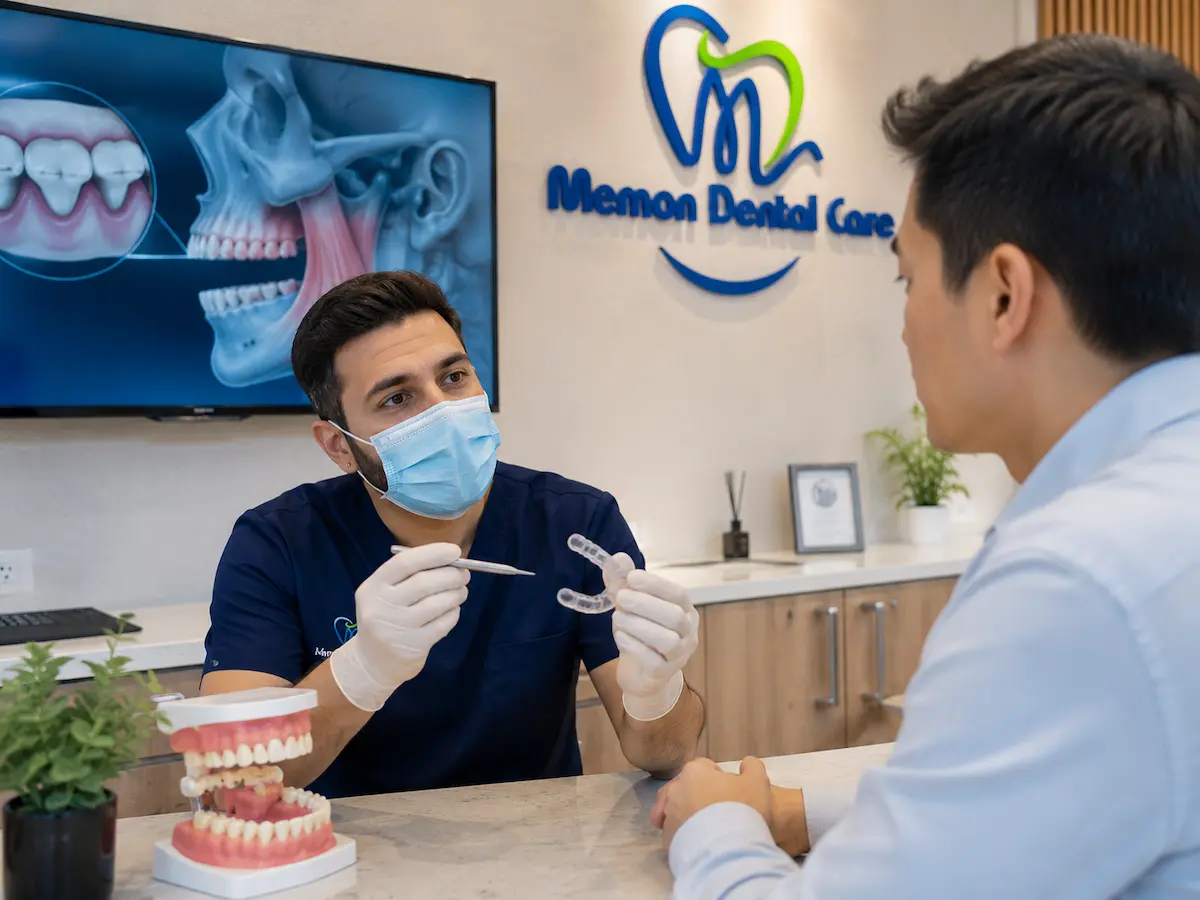
Bruxism treatment in Castle Hill is something most people only seek out after the damage has already started. A cracked tooth. A jaw that aches every morning. Headaches that begin before you even get out of bed. These are not random problems. They are your body telling you that you grind your teeth, and that it has been going on long enough to cause real harm.
The frustrating part about bruxism is that most people have no idea they do it. You grind your teeth at night, while you sleep, with no awareness whatsoever. By the time a partner mentions the noise or a dentist spots the worn enamel, the habit has often been running for months or years.
At Memon Dental Care, Dr Mohammed Sohail Memon and our team treat bruxism in Castle Hill regularly. We diagnose it early, protect your teeth before serious damage sets in, and build a treatment plan around what is actually driving your grinding. This guide explains everything you need to know.
What Is Bruxism and Why Does It Happen?
Bruxism is the clinical term for grinding, gnashing, or clenching your teeth. It falls into two types: sleep bruxism, which happens at night and is considered a sleep-related movement disorder, and awake bruxism, which happens during the day, often when you are concentrating, stressed, or tense without realising it.
Neither type is fully understood, but research points to a clear set of contributing factors:
- Stress and anxiety, which are among the most common triggers
- Sleep disorders, particularly sleep apnea, which research links strongly to nighttime grinding
- Bite misalignment, where uneven tooth contact creates pressure on the jaw
- Caffeine and alcohol consumption, especially in the evening
- Certain medications, including some antidepressants
- Genetics, since bruxism tends to run in families
The key thing to understand is that bruxism is not simply a dental habit you can decide to stop. For sleep bruxism especially, it happens outside your conscious control. That is why professional treatment matters, and why hoping it will go away on its own rarely works.
The Warning Signs: How Do You Know If You Grind Your Teeth?
Because so much grinding happens during sleep, the signs often show up during the day rather than during the act itself. Watch out for:
- Waking up with jaw pain, stiffness, or soreness
- Morning headaches, particularly around the temples
- Ear pain or a feeling of fullness in the ears with no infection present
- Teeth that feel sensitive to hot, cold, or pressure
- Chipped, flattened, or worn-down tooth surfaces
- Indentations on the side of your tongue
- Cheek tissue damage from biting the inside of your cheeks during sleep
- A partner telling you they can hear grinding sounds at night
- Jaw clicking or popping when you open and close your mouth
You might only have two or three of these signs, but even that is enough to warrant a check-up. At our dental check-up Castle Hill appointments, we routinely check for bruxism signs even when patients come in for something else entirely. Early detection makes a significant difference to the treatment needed.
What Bruxism Actually Does to Your Teeth and Jaw
This is the part that makes bruxism worth taking seriously. The pressure generated during grinding can reach up to ten times the force of normal chewing. Applied night after night, that force causes damage that accumulates faster than most people expect.
According to Healthdirect Australia, untreated bruxism can lead to:
Tooth damage: Enamel is the hardest substance in the human body, but grinding wears it down progressively. Once enamel is gone, it does not grow back. Worn enamel leads to increased sensitivity, a higher risk of cavities, and teeth that look shorter or flatter than they should.
Cracked and fractured teeth: The repeated pressure and lateral movement of grinding creates micro-fractures in teeth. These cracks can deepen over time and eventually cause a tooth to crack through, requiring a crown or in severe cases extraction.
TMJ disorder: The temporomandibular joint connects your jaw to your skull. Chronic grinding places excessive strain on this joint, leading to pain, clicking, locking, and TMJ disorder that can affect your ability to chew and speak comfortably.
Gum recession: The force from grinding transfers to the roots of the teeth, which can contribute to gum recession over time. If you already have gum concerns, we can assess both together at our gum disease treatment Castle Hill service.
Failed dental restorations: Crowns, veneers, and fillings are strong, but none are designed to withstand the sustained force of bruxism. Grinding accelerates the wear and eventual failure of any dental work you already have.
Bruxism Treatment Castle Hill: What We Offer at Memon Dental Care
There is no single treatment that eliminates bruxism entirely, but the right combination of dental protection and lifestyle management keeps the damage under control and gives your jaw a chance to recover. Here is what we offer.
Custom Occlusal Splint (Night Guard)
The front-line treatment for sleep bruxism is a custom-made occlusal splint, also called a night guard. This is a precisely fitted appliance made from medical-grade acrylic that sits over your upper or lower teeth while you sleep.
What it does:
- Creates a barrier that prevents direct tooth-on-tooth contact
- Redistributes the force of grinding across the appliance rather than concentrating it on individual teeth
- Reduces muscle hyperactivity in the jaw, which lessens morning soreness and headaches
- Protects existing dental work including crowns, veneers, and fillings
- Helps maintain proper jaw joint alignment
A custom splint from our Castle Hill practice fits precisely because we take accurate impressions of your teeth. This is important. Over-the-counter night guards from a pharmacy are bulky, often uncomfortable, and because they do not fit accurately they can actually worsen jaw muscle tension rather than relieve it. A custom splint feels like it belongs in your mouth.
Bite Assessment and Occlusal Adjustment
In some cases, bruxism connects to bite misalignment, where your teeth do not meet evenly and the jaw compensates by grinding. We carry out a thorough bite analysis to assess whether your tooth contacts are contributing to the habit. Minor adjustments to the bite surface can relieve the uneven pressure that drives grinding in susceptible patients.
Where more significant bite correction applies, we can discuss options including dental crowns Castle Hill to restore worn tooth surfaces and rebuild a proper bite relationship.
Repairing the Damage Already Done
If bruxism has already worn down or cracked your teeth, the treatment does not stop at protecting what remains. We also restore the damage. Depending on what we find, this might involve tooth-coloured fillings to rebuild worn surfaces, dental crowns Castle Hill for significantly damaged teeth, or dental veneers Castle Hill to address the aesthetic effects of worn enamel on front teeth.
Stress and Lifestyle Guidance
Because stress drives a large proportion of bruxism cases, addressing what happens outside the dental chair matters too. We discuss practical strategies with our patients including:
- Jaw relaxation exercises to reduce muscle tension before sleep
- Reducing caffeine and alcohol, particularly in the evening
- Identifying and managing daytime clenching habits
- Considering referral to a GP or sleep specialist if sleep apnea may be a contributing factor
We are not here to tell you how to live your life. But the research is clear that dental treatment works best when patients also address the lifestyle factors that fuel the grinding.
How We Diagnose Bruxism at Our Castle Hill Practice
You cannot self-diagnose bruxism with certainty because the physical signs require a trained eye to identify and measure. At Memon Dental Care, our diagnostic process includes:
A thorough clinical examination of your teeth for signs of wear, chipping, and flattening. We assess the pattern of wear, which tells us a great deal about the severity and duration of the grinding. We palpate the jaw muscles and temporomandibular joints to check for tenderness and restricted movement. Dental X-rays let us assess the bone around the teeth and the health of the jaw joint. We also take your full medical history and ask about your sleep, stress levels, and any symptoms you have noticed.
From this assessment we build a clear picture of your bruxism and recommend treatment proportionate to the damage present and the risk of further harm.
FAQ: Bruxism Treatment Castle Hill
Can bruxism go away on its own?
Mild, stress-related bruxism sometimes reduces when the stressor passes. But chronic bruxism, especially sleep bruxism, rarely resolves without some intervention. The risk of waiting is that the damage to your teeth and jaw continues while you do. Coming in for an assessment costs you nothing compared to what restorative treatment for severely worn or cracked teeth costs later.
How long does a custom night guard last?
Most custom occlusal splints last two to five years depending on how severely you grind. We check the fit and condition of your splint at regular appointments and advise when it needs replacing or adjusting.
Will a night guard stop me from grinding?
A night guard protects your teeth from the effects of grinding but does not eliminate the grinding reflex itself. Think of it as a shield rather than a cure. For many patients, splint therapy combined with stress management significantly reduces the intensity and frequency of grinding over time, but the primary goal is protecting your teeth while the underlying causes are addressed.
Is bruxism linked to sleep apnea?
Yes, Research confirms a strong correlation between sleep bruxism and obstructive sleep apnea. If you snore heavily, feel unrefreshed after sleep, or a partner notices breathing pauses at night alongside the grinding, we recommend speaking with your GP about a sleep study. Treating sleep apnea can substantially reduce bruxism in patients where the two conditions coexist.
My jaw clicks and locks sometimes. Is that bruxism?
Jaw clicking and locking are signs of temporomandibular joint (TMJ) dysfunction, which bruxism commonly causes or worsens. It warrants proper assessment. Come in and we will examine your jaw joint, assess muscle tenderness, and determine whether a splint and muscle rehabilitation exercises can improve the symptoms.
My child grinds their teeth at night. Do they need treatment?
Teeth grinding in children is relatively common and often resolves as baby teeth are replaced by adult teeth. However, if your child grinds heavily, shows signs of wear, or complains of jaw pain, it is worth bringing them in for an assessment. We see children at our practice and can advise whether active treatment or watchful monitoring is the right approach.
Serving Castle Hill and the Hills District
Memon Dental Care is located at Suite 17, Terminus Central, Castle Hill, open Monday to Saturday. We welcome patients from Cherrybrook, Baulkham Hills, Northmead, Westmead, Parramatta, Seven Hills, Blacktown, Quakers Hill, Merrylands, Granville, Auburn, Bankstown, Rooty Hill, St Marys, Mount Druitt, and surrounding suburbs.
If you wake up with a sore jaw, your teeth look shorter than they used to, or someone has told you that you grind your teeth at night, do not put it off. Book your bruxism assessment at Memon Dental Care today and let us protect your smile before the damage gets ahead of you.