Gum disease treatment in Castle Hill is something far too many people put off until the damage is already done. Bleeding gums when you brush. That persistent bad breath no matter how many times you rinse. Gums that look like they are slowly pulling away from your teeth. These are not signs to ignore. These are your mouth calling for help.
At Memon Dental Care, we see this every week. Patients come in thinking their gums are “just a little sensitive,” and we find early to moderate periodontitis that could have been stopped months ago with a simple scale and clean. The good news? When caught early, gum disease is highly treatable and in many cases fully reversible.
This guide covers everything you need to know about gum disease, from the very first warning signs to the treatments that work, so you can take action now before it costs you teeth.
What Is Gum Disease and Why Does It Happen?
Gum disease, also called periodontal disease, is a bacterial infection of the tissues that hold your teeth in place. It starts with plaque, that soft, sticky film of bacteria that builds up on your teeth every day. When you skip proper brushing and flossing, plaque hardens into tartar (also called calculus). Once tartar forms, your toothbrush cannot remove it. Only a professional dental cleaning can.
The bacteria in tartar irritate your gums, causing inflammation. Left unchecked, that inflammation works its way deeper, attacking the ligaments and bone that anchor your teeth. That is how people lose teeth to gum disease, not from the disease itself, but from the slow destruction of the foundation holding their teeth in.
Common causes and risk factors include:
- Inconsistent or incorrect brushing and flossing technique
- Smoking, which dramatically increases the risk and slows healing
- Diabetes, which affects how the body responds to infection
- Certain medications that cause dry mouth or gum overgrowth
- Hormonal changes during pregnancy or menopause
- Genetics, since some people are simply more susceptible
Understanding your personal risk factors helps us create a treatment and prevention plan that is tailored specifically to you at our preventive dentistry Castle Hill practice.
The Three Stages of Gum Disease
Not all gum disease looks the same. It progresses through stages, and the stage you are at determines the treatment you need.
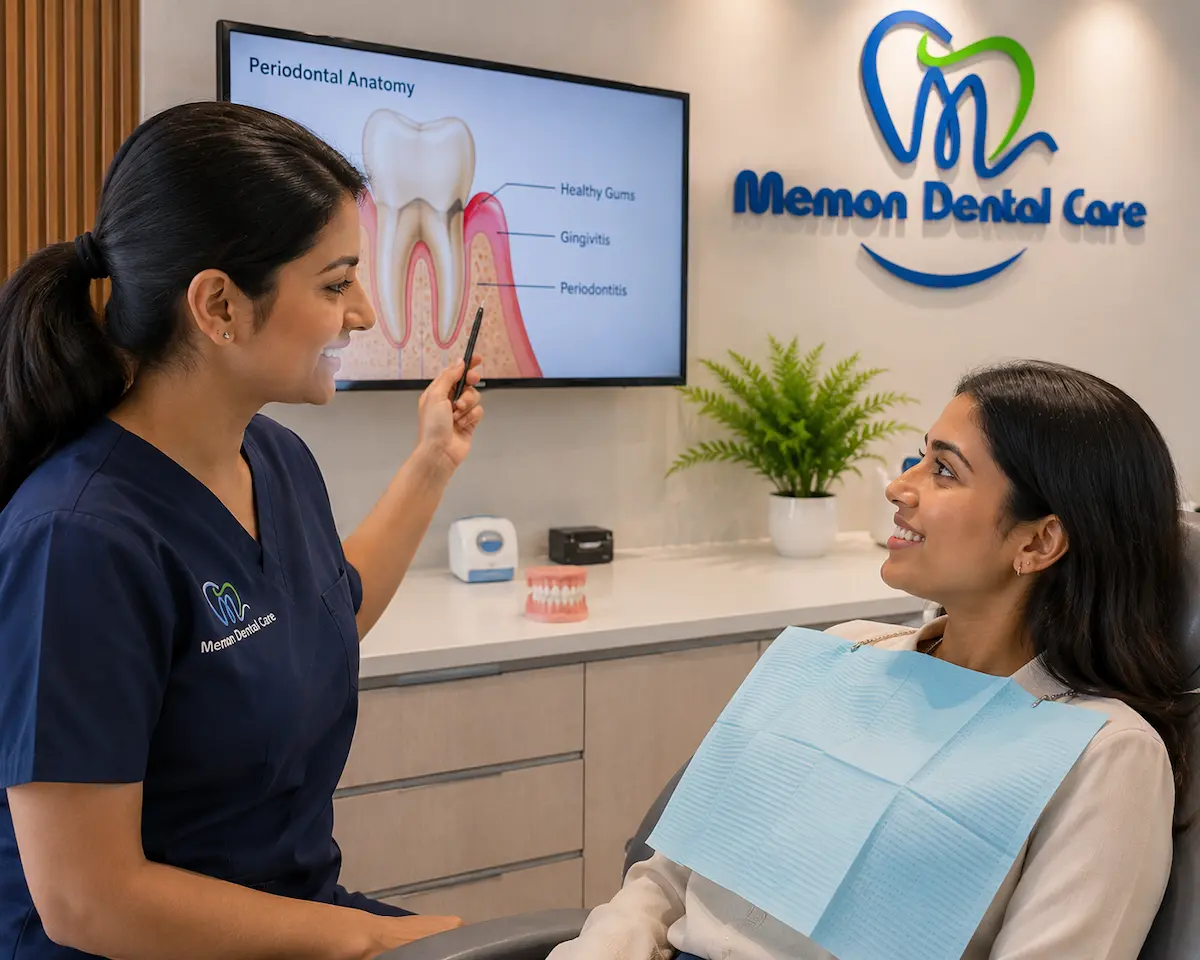
Stage 1: Gingivitis
Gingivitis is the earliest and mildest form of gum disease. At this stage, the infection is limited to the gums themselves. The bone and ligaments underneath are not yet affected.
Signs of gingivitis include:
- Red or swollen gums
- Gums that bleed easily when brushing or flossing
- Persistent bad breath
- Gums that feel tender to touch
The crucial thing to know about gingivitis is that it is completely reversible. A professional scale and clean at our dental check-up Castle Hill clinic, combined with improved home care, can fully restore gum health at this stage. Most patients who come in at the gingivitis stage leave with a clear, manageable plan and see real improvement within a few weeks.
Stage 2: Periodontitis
When you leave gingivitis untreated, it advances to periodontitis. At this stage, the infection has moved below the gum line. Pockets form between the teeth and gums, trapping bacteria, plaque, and tartar where your toothbrush cannot reach. The supporting bone begins to break down.
Symptoms of periodontitis include:
- Gums pulling away from the teeth (receding gums)
- Teeth appearing longer than before
- Persistent bad breath that does not go away with brushing
- Pus between the teeth and gums
- Teeth feeling loose or shifting position
- Pain when chewing
At this stage, treatment is more involved. According to Healthdirect Australia, dentists typically need to perform professional deep cleaning procedures to remove bacteria from below the gum line and help the gum tissue reattach to the teeth.
Stage 3: Advanced Periodontitis
This is the most severe stage of gum disease. The bone destruction is significant. Teeth may become severely loose, painful to bite on, and at serious risk of falling out or needing extraction. At this point, your dentist may need to perform surgical intervention.
This is why early intervention matters so much. Advanced periodontitis is largely preventable when gum disease is caught and treated in its earlier stages.
Gum Disease Treatment Castle Hill: What We Actually Do
At Memon Dental Care, our approach to gum disease treatment in Castle Hill is thorough, personalised, and grounded in the latest clinical evidence. Here is what your treatment journey looks like with us.
Comprehensive Periodontal Assessment
Before any treatment begins, we carry out a full periodontal assessment. This includes measuring the depth of the pockets around each tooth using a periodontal probe, assessing bone levels through dental X-rays, and reviewing your full medical and dental history. This gives us a complete picture of your gum health and allows us to plan treatment that is right for your specific situation.
Professional Scale and Clean
For early-stage gum disease, a professional scale and clean is often the first and most effective treatment. We use ultrasonic scalers and fine hand instruments to thoroughly remove all plaque and tartar from above and below the gum line. This reduces the bacterial load, calms inflammation, and gives your gums the chance to heal.
Deep Cleaning: Scaling and Root Planing
For moderate to advanced periodontitis, we go deeper. Scaling and root planing is a non-surgical deep cleaning procedure that removes bacterial deposits from the root surfaces of your teeth below the gum line. The root surfaces are then smoothed (planed) to make it harder for bacteria to attach in the future and to encourage the gum tissue to reattach.
We apply local anaesthetic to keep you comfortable throughout. Most patients are surprised by how pain-free the experience is. This is the cornerstone treatment for periodontitis and, when combined with proper home care, produces excellent long-term results.
Ongoing Maintenance and Review
Gum disease management does not stop when the initial treatment is complete. Once your gum health is restored, regular periodontal maintenance appointments are essential to keep the disease from returning. We will schedule you for check-ups every three to four months initially, adjusting as your gum health stabilises.
This ongoing relationship is important. Research confirmed by the Australian Dental Association shows patients who maintain regular periodontal review appointments after treatment have significantly better long-term outcomes than those who return to annual checks alone.
The Link Between Gum Disease and Your Overall Health
This is the part most people do not know about. Gum disease does not just affect your mouth.
Decades of research have established clear links between untreated periodontal disease and serious systemic health conditions. The same bacteria that infect your gums can enter your bloodstream and contribute to:
- Heart disease and increased risk of heart attack
- Type 2 diabetes, with gum disease making blood sugar harder to control (and diabetes worsening gum disease in return)
- Complications during pregnancy including preterm birth and low birth weight
- Respiratory infections, particularly in people with pre-existing lung conditions
- Increased risk of stroke
Treating gum disease at our Memon Dental Care Castle Hill practice is not just about saving your teeth. It is about protecting your overall health. If you have also been putting off addressing tooth pain alongside gum issues, our tooth extraction Castle Hill and root canal Castle Hill services are available for cases where damage has progressed further.
Warning Signs: Do You Need Gum Disease Treatment?
Book an appointment if you notice any of the following:
- Your gums bleed when you brush, floss, or eat
- Your gums look red, swollen, or darker than usual
- You have persistent bad breath or a bad taste in your mouth
- Your gums seem to be shrinking away from your teeth
- One or more teeth feel loose or have shifted position
- You have pain or discomfort when biting or chewing
- You notice pus around your teeth or gums
- You have not had a professional clean in more than a year
The earlier you come in, the simpler and more effective the gum disease treatment will be. Many people wait until the pain becomes unbearable. By that point, the disease has usually progressed much further than it needed to.
FAQ: Gum Disease Treatment Castle Hill
Is gum disease treatment in Castle Hill painful?
Most patients are comfortable throughout treatment. For deep cleaning procedures, we use local anaesthetic so you do not feel discomfort during the appointment. Mild tenderness for a day or two afterward is normal and manageable with over-the-counter pain relief.
How long does gum disease treatment take?
It depends on the severity. Gingivitis can often be addressed in a single professional clean. Moderate to advanced periodontitis may require two to four sessions of scaling and root planing, followed by review appointments. We will give you a clear timeline at your assessment.
Can gum disease come back after treatment?
Yes, it can, which is why maintenance is so important. The bacteria that cause gum disease are always present in the mouth. Without regular professional cleaning and good home care, the disease can return. Sticking to your scheduled review appointments and maintaining daily brushing and flossing dramatically reduces this risk.
Does health insurance cover gum disease treatment in Castle Hill?
Many private health funds cover periodontal treatment under the extras category, though the amount varies by policy. We recommend calling your insurer before your appointment to confirm your cover. Our team can provide you with an itemised treatment plan to submit to your fund.
What happens if I leave gum disease untreated?
Untreated gum disease progresses. What starts as reversible gingivitis can become irreversible bone loss, loose teeth, and eventual tooth loss. There is also the broader health impact, with links to heart disease, diabetes, and other serious conditions. Early treatment is always the better and more affordable option.
I am pregnant. Is gum disease treatment safe?
Yes, In fact, treating gum disease during pregnancy is strongly recommended. Pregnancy hormones increase gum sensitivity and the risk of gum inflammation. Research links untreated periodontal disease during pregnancy to serious complications. Professional cleaning is safe during pregnancy, and our team will adjust your care accordingly.
Serving Castle Hill and the Hills District
Our dental clinic is located at Suite 17, Terminus Central, and is open Monday to Saturday. We welcome patients from across the Hills District including Cherrybrook, Northmead, Westmead, Parramatta, Blacktown, Seven Hills, Baulkham Hills, Quakers Hill, Mount Druitt, Rooty Hill, St Marys, Granville, Auburn, Bankstown, Merrylands, Rose Hill, Yagoona, and surrounding suburbs.
If you are ready to take gum disease seriously and want a dental team that will treat you with both clinical precision and genuine care, book your appointment with Memon Dental Care today.
One thought on “Gum Disease Treatment Castle Hill: Stop the Bleed Before It Costs You a Tooth”